How a tyre becomes new rubber
Tyre recycling is the careful work of taking apart something built never to come apart. Here is how we do it, and what comes out at the end.
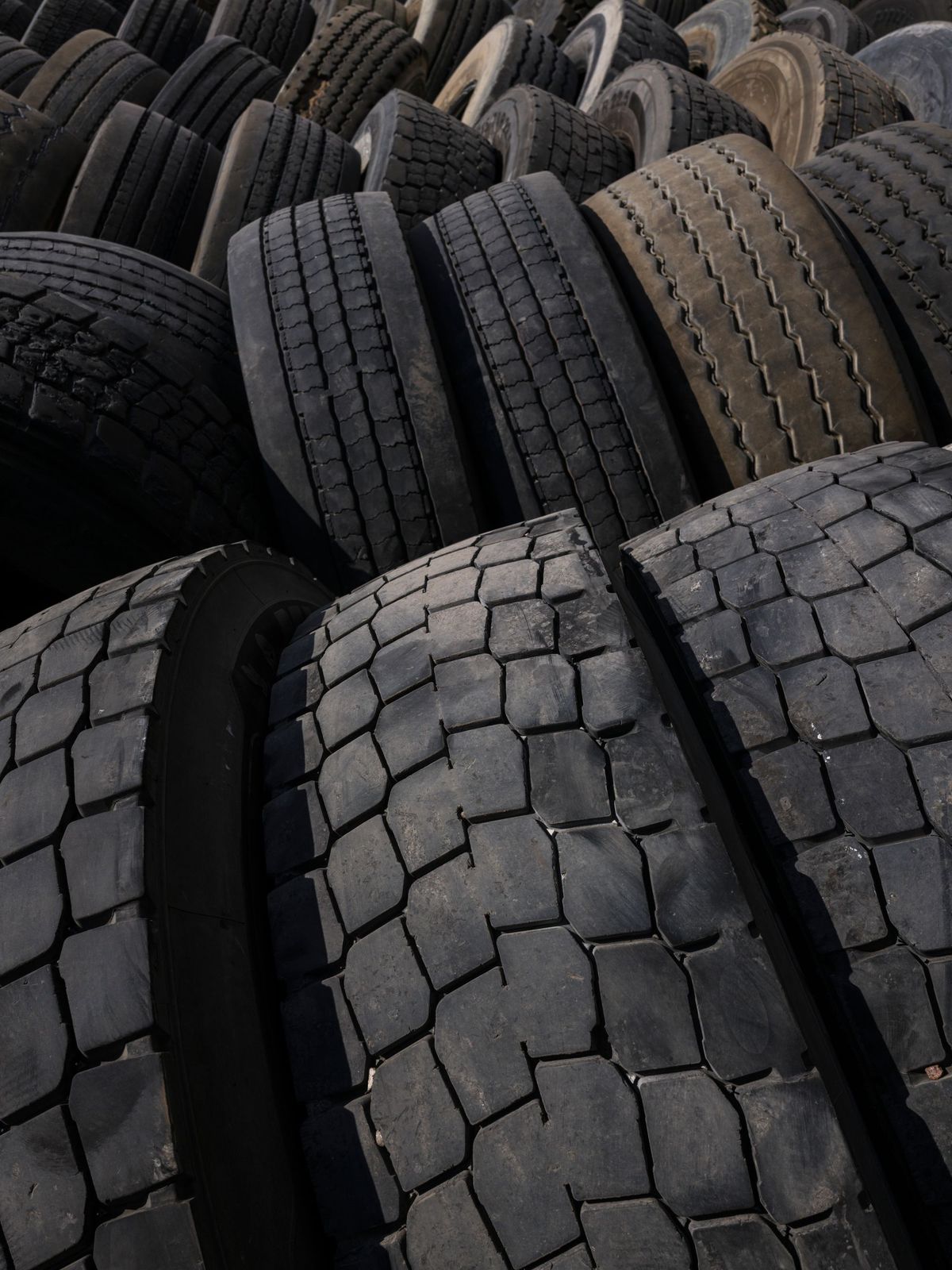
What we take apart
A tyre is rubber built around a skeleton of steel belts, textile ply and bead wire.
Clean separation of these layers is what makes recycled rubber valuable, and what lets us sell the steel too.
From whole tyre to clean rubber
We use ambient mechanical recycling: tyres are broken down at room temperature with shredders, granulators, magnets and air separators.
- I.
Collect and sort
Car and truck tyres from India and overseas are checked and sorted.
- II.
Cut
Tyres are cut down and the heavy bead wire is pulled out.
- III.
Shred
Shredders tear the rubber into coarse chips.
- IV.
Granulate
Chips are ground into granules and fine crumb.
- V.
Separate
Magnets pull out the steel, air lifts off fibre, and rubber is screened.
From coarse chips to fine crumb
The longer rubber stays in the process, the finer and cleaner it gets. Steel is recovered all along the line.
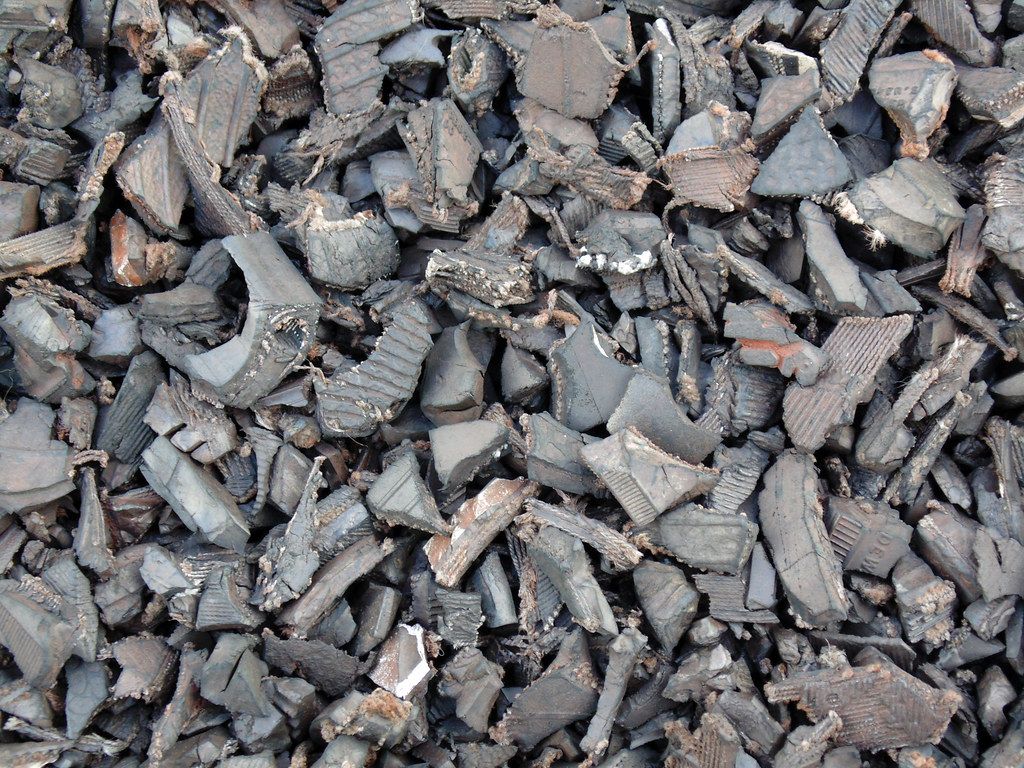
Rubber chips Coarse
First off the shredder. For landscaping and civil works.
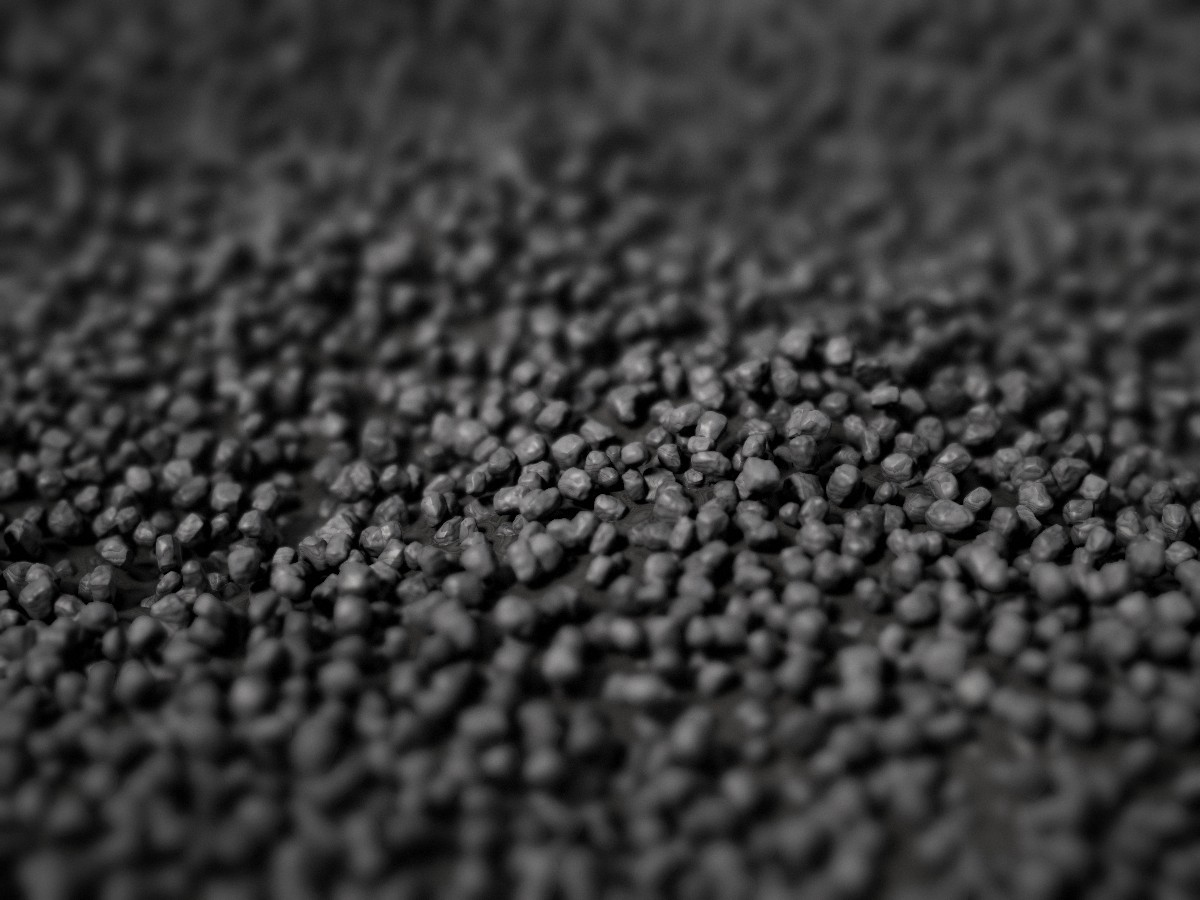
Rubber granules Medium
Ground and cleaned. For tracks, floors and turf.
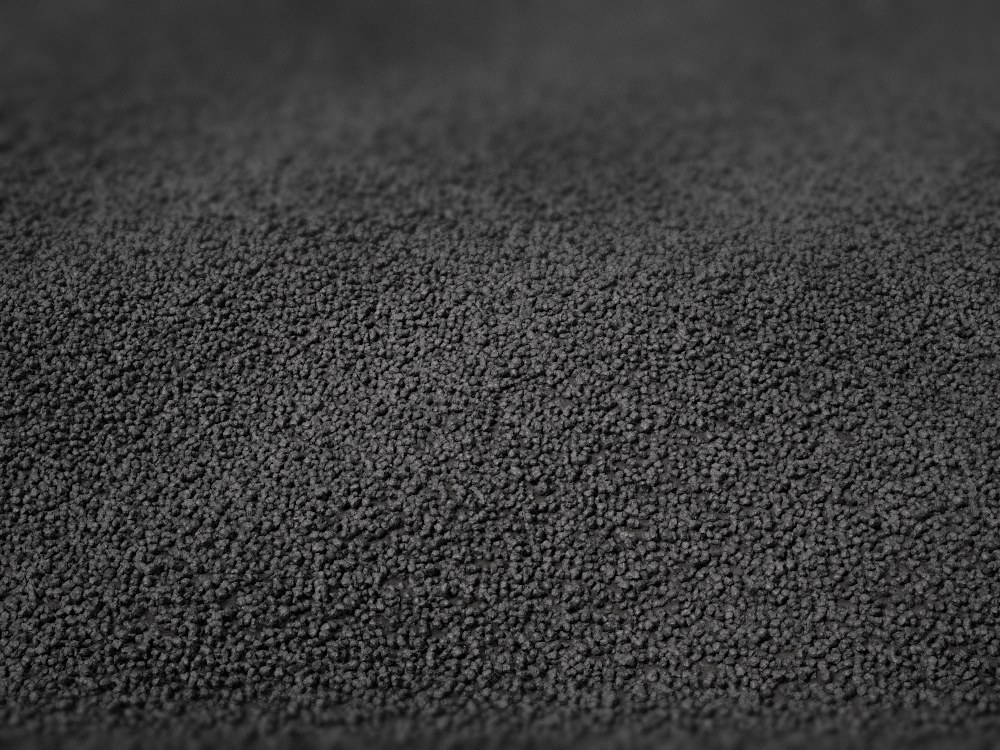
Crumb rubber Fine
Milled and screened by mesh. For bitumen and moulded goods.
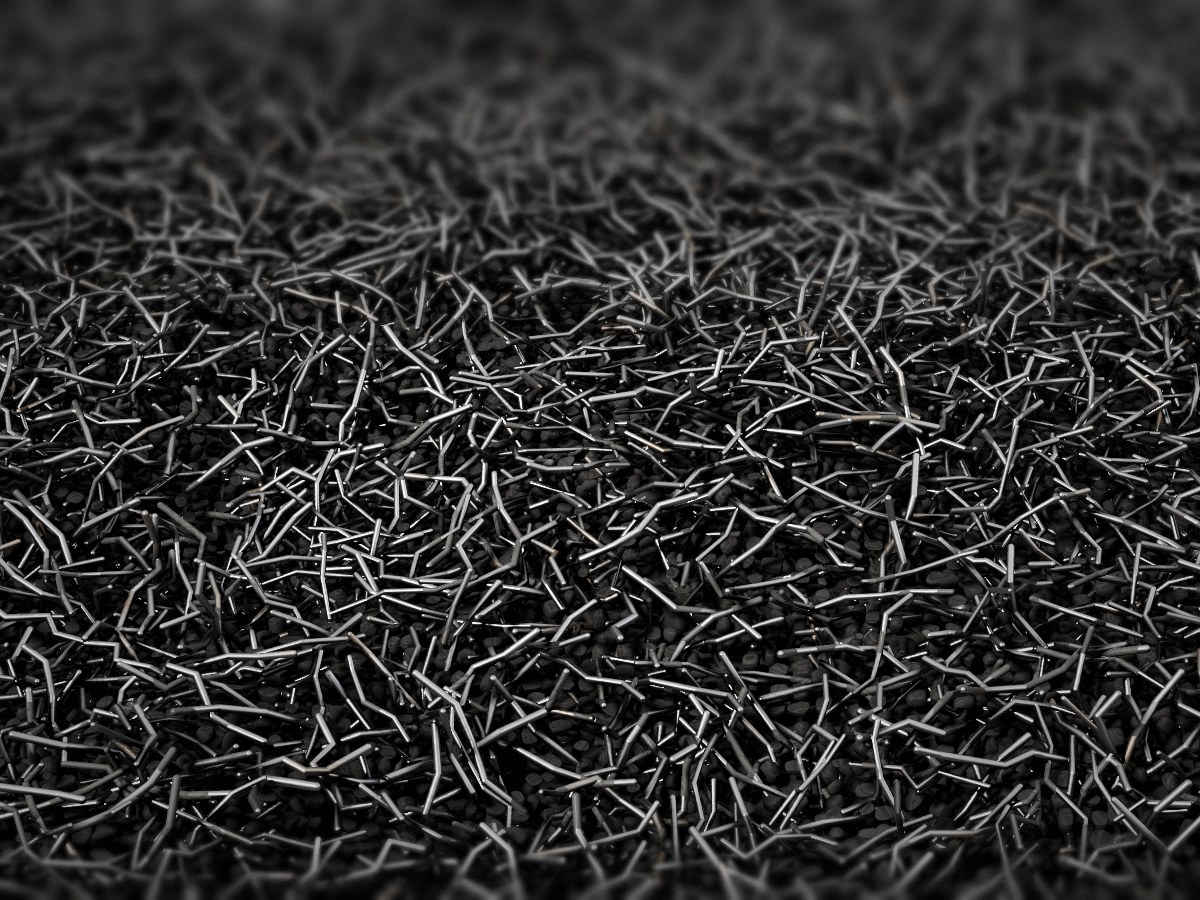
Steel shreds By-product
Pulled out by magnets, sold for melting.
Ambient and cryogenic grinding
We use ambient grinding, which gives crumb a rough surface that bonds well in bitumen and moulded goods.
| Ambient grinding (our method) | Cryogenic grinding | |
|---|---|---|
| Temperature | Room temperature | Rubber frozen with liquid nitrogen |
| How it works | Granulators and mills tear the pliable rubber | Frozen rubber shatters like glass in a hammer mill |
| Particle surface | Rough and irregular, with more area to bond | Smooth and clean-cut |
| Well suited to | Rubber-modified bitumen, moulded goods, sports surfaces | Very fine powders |
| Running cost | Lower | Higher, because of liquid nitrogen |
Recycling by the numbers
Official figures from NITI Aayog, Government of India.
Every stream has a use
Once separated, each material goes back into industry.
Rubber
Chips, granules and crumb for roads, sports surfaces, play areas, turf, moulded goods and landscaping.
Steel
Recovered bead and belt wire, sold as steel shreds for melting into new steel.
Textile
Separated out by air so the rubber we supply stays clean.